
When I launched StackPicked, I made one decision before writing a single article: build an email list first. Not social media. Not ads. Email.
Every follower you build on Instagram or TikTok is rented. The platform owns them. One algorithm change, one account flag, one policy update — and they’re gone. I’ve watched bloggers lose years of social audience overnight. It doesn’t happen with email. Your list lives in a spreadsheet. No platform can touch it.
The second thing no one tells you when you’re starting out: you don’t need to pay anything to build a real email list. The free plans on today’s best tools aren’t crippled demos — they’re fully functional platforms capable of handling your first 1,000 subscribers, your welcome automation, and your first 12,000 emails a month. For free.
Quick answer: MailerLite is the best free email marketing tool for most beginners — 1,000 subscribers, 12,000 emails/month, automation on free, and a landing page builder. Kit is the better pick if you expect to grow fast (10,000 free subscribers). Brevo is the only tool with no contact limit on free.
Why Email Still Beats Every Other Channel
The numbers are hard to argue with:
- Email ROI runs $36–$42 for every $1 spent — higher than any other marketing channel
- Average open rates across industries: 21–35%, compared to 1–5% organic reach on social
- Email subscribers convert to buyers at 3–4x the rate of social followers
Building 1,000 email subscribers is genuinely achievable in your first six months. Building 1,000 engaged YouTube or Instagram followers takes far longer. Email is the highest-leverage channel for a new blog or content business.
How I Ranked These Tools
Every tool was tested by:
- Creating a real account and importing test contacts
- Setting up a signup form and embedding it on a test page
- Sending a test campaign to verify deliverability
- Building a basic automation sequence (welcome email + follow-up)
- Checking the free plan limits against real-world usage
1. MailerLite — Best Overall for Beginners
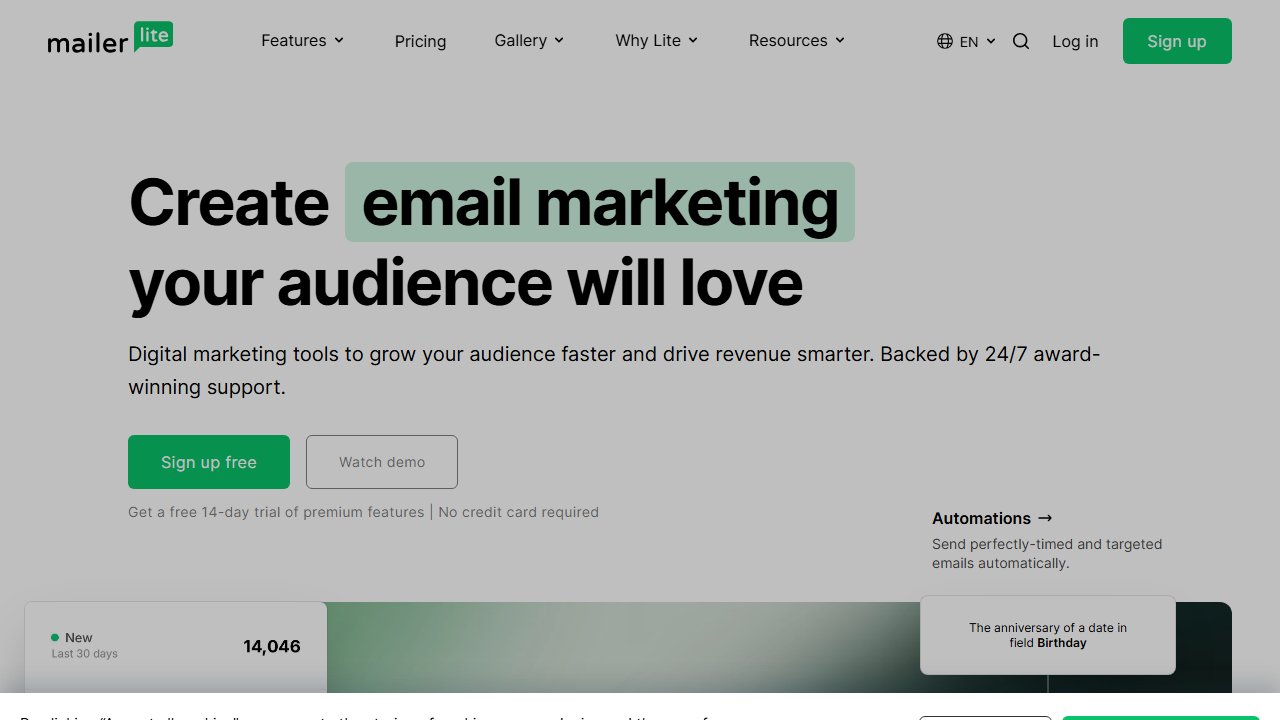
MailerLite is the tool I actually use for StackPicked’s email list, and it’s the one I’d recommend to most new bloggers and content creators.
Why it wins: The free plan is genuinely functional. You get automation (not just one-off campaigns), a landing page builder, a signup form builder, and a solid drag-and-drop email editor — all for free, up to 1,000 subscribers.
Free Plan
- Subscribers: 1,000
- Emails/month: 12,000
- Automation: Yes (including multi-step sequences)
- Landing pages: Yes (unlimited)
- Signup forms: Yes
- A/B testing: No (paid)
- Branding removal: No (MailerLite logo on emails)
What I Like
The UI is clean and fast. The email editor is the best drag-and-drop in this category — templates look professional without looking generic. The automation builder handles the fundamentals well: welcome sequences, tagging subscribers by interest, follow-up sequences.
Support on the free plan is email-only, but response times are reasonable (24-48 hours).
What I Don’t Like
The free plan includes MailerLite branding on emails. It’s not prominent, but it’s there. If this matters to you, the paid plan removes it at $10/month for up to 500 subscribers.
The 1,000 subscriber limit means you’ll need to upgrade eventually — but for most new bloggers, that milestone is 6-12 months away, and by then you’ll have more than enough reason to pay for the upgrade.
Best For
New bloggers, content creators, and solo founders building their first email list. Anyone who wants automation without paying for it upfront.
2. Kit (formerly ConvertKit) — Best for Creators Expecting Fast Growth
Kit was built specifically for content creators — bloggers, podcasters, YouTubers, course creators. It shows.
The free plan is unusually generous: 10,000 subscribers for free. That covers most creators through their entire first year and into year two. The trade-off is that automation is limited on free.
Free Plan
- Subscribers: 10,000
- Emails/month: Unlimited (to your list)
- Automation: Basic (no multi-step sequences on free)
- Landing pages: Yes (unlimited, no branding)
- Signup forms: Yes
- A/B testing: No (paid)
- Commerce: Yes (sell digital products, even on free)
What I Like
The landing pages on Kit’s free plan are genuinely good — no branding, professional templates, and they convert well. The commerce integration is a legitimate differentiator: you can sell a digital product or course before you have 100 subscribers.
The plain-text email aesthetic is also worth noting. Kit leans toward plain text over heavy HTML templates, which tends to improve deliverability and open rates because it reads like a personal email rather than a newsletter.
What I Don’t Like
No multi-step automations on the free plan. You can send broadcasts and build a list, but you can’t set up a 5-email welcome sequence without upgrading to Creator ($25/month for up to 1,000 subscribers).
The free plan also lacks subscriber tagging and segmentation beyond the basics.
Best For
Creators who expect to grow fast and want to sell digital products or courses from day one. Anyone who wants the largest possible free subscriber limit.
3. Brevo (formerly Sendinblue) — Best for High Email Volume
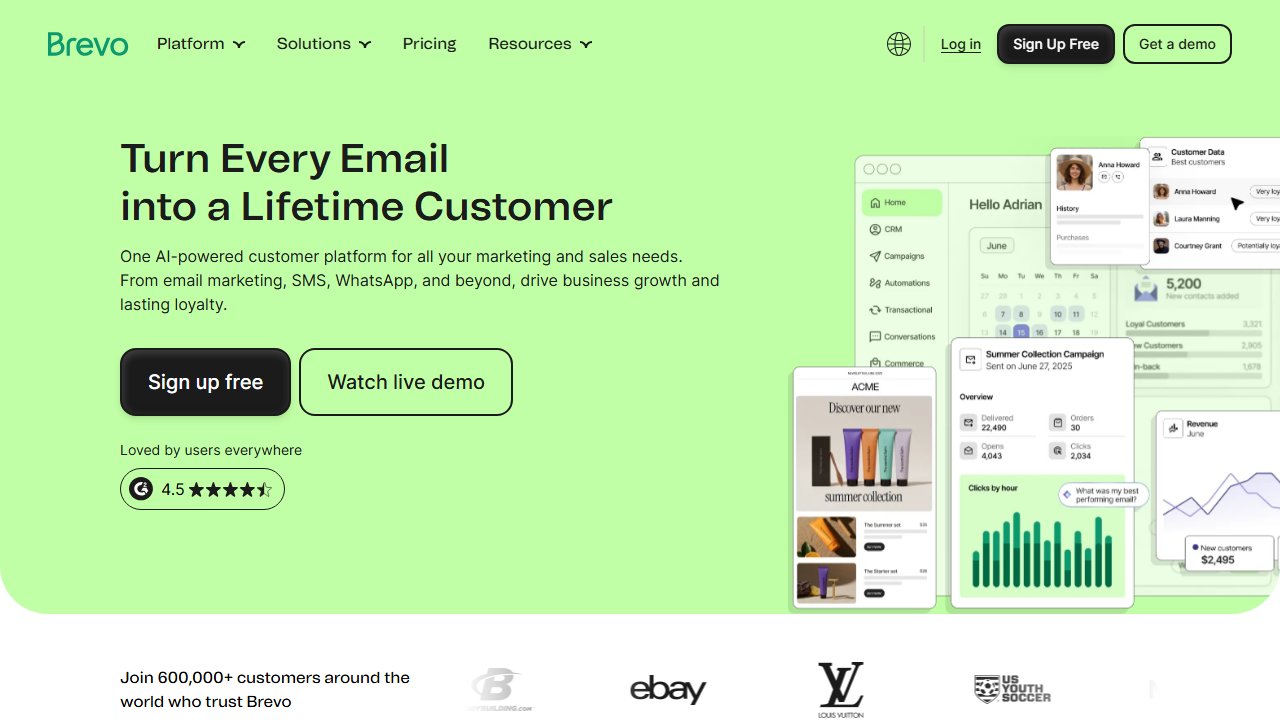
Brevo is the only tool on this list with no contact limit on the free plan. You can have 100,000 contacts and pay nothing — as long as you stay under 300 emails per day (9,000/month).
For bloggers with a newsletter, 300 emails/day is often more than enough early on. If you have 500 subscribers and send one email a week, that’s 500 emails total — well within the daily limit.
Free Plan
- Subscribers: Unlimited
- Emails/month: 9,000 (300/day limit)
- Automation: Yes (limited workflow steps)
- Landing pages: No (paid)
- Signup forms: Yes
- Transactional email: Yes (unique in this category)
What I Like
The unlimited contact storage is genuinely useful if you’re importing a large existing list or running any kind of lead generation. You can collect and store contacts without paying anything, and only start paying when you need to email them at scale.
The transactional email feature (for things like password resets and order confirmations) is available on the free plan, which makes Brevo the only tool here that works for both marketing emails and system emails.
What I Don’t Like
The daily sending limit (300/day) creates friction as your list grows. If you have 1,000 subscribers and want to send a campaign, you have to schedule it to run over 3-4 days or upgrade.
The interface is functional but not as clean as MailerLite or Kit.
Best For
Anyone with a large existing list who wants to import and start sending without hitting subscriber limits. Developers or founders running a product who need transactional emails alongside marketing.
4. Mailchimp — Most Recognizable, but Limits Are Tighter Now
Mailchimp is the name everyone knows. It was the default choice for bloggers for years — generous free plan, well-documented API, massive integration ecosystem.
The free plan has tightened significantly over the past few years. What used to be 2,000 free subscribers is now 500 in most cases, with 1,000 email sends per month.
Free Plan
- Subscribers: 500
- Emails/month: 1,000
- Automation: One-step only (welcome email trigger)
- Landing pages: Yes (limited)
- Signup forms: Yes
- A/B testing: No (paid)
What I Like
Mailchimp has the largest integration ecosystem of any tool on this list. Shopify, WordPress, Squarespace, WooCommerce, Zapier — everything connects to Mailchimp because it’s been around long enough to become a standard.
The reporting is solid. Open rates, click maps, audience growth over time — all available on the free plan.
What I Don’t Like
500 subscribers is not a meaningful free tier for anyone trying to build a real list. You’ll hit the limit before you’ve learned to use the tool properly, and the upgrade cost to get to 1,000 subscribers starts at $13/month.
The automation on the free plan is a single-step welcome email. No sequences, no tagging, no conditional logic.
Mailchimp’s pricing has also become complicated — it changes based on contact count, sends, and features, making it hard to predict future costs.
Best For
Existing users who are already on Mailchimp and don’t have a reason to migrate. E-commerce stores that need the Shopify or WooCommerce integration. Anyone whose stack already depends on Mailchimp’s API.
5. Omnisend — Best for E-Commerce
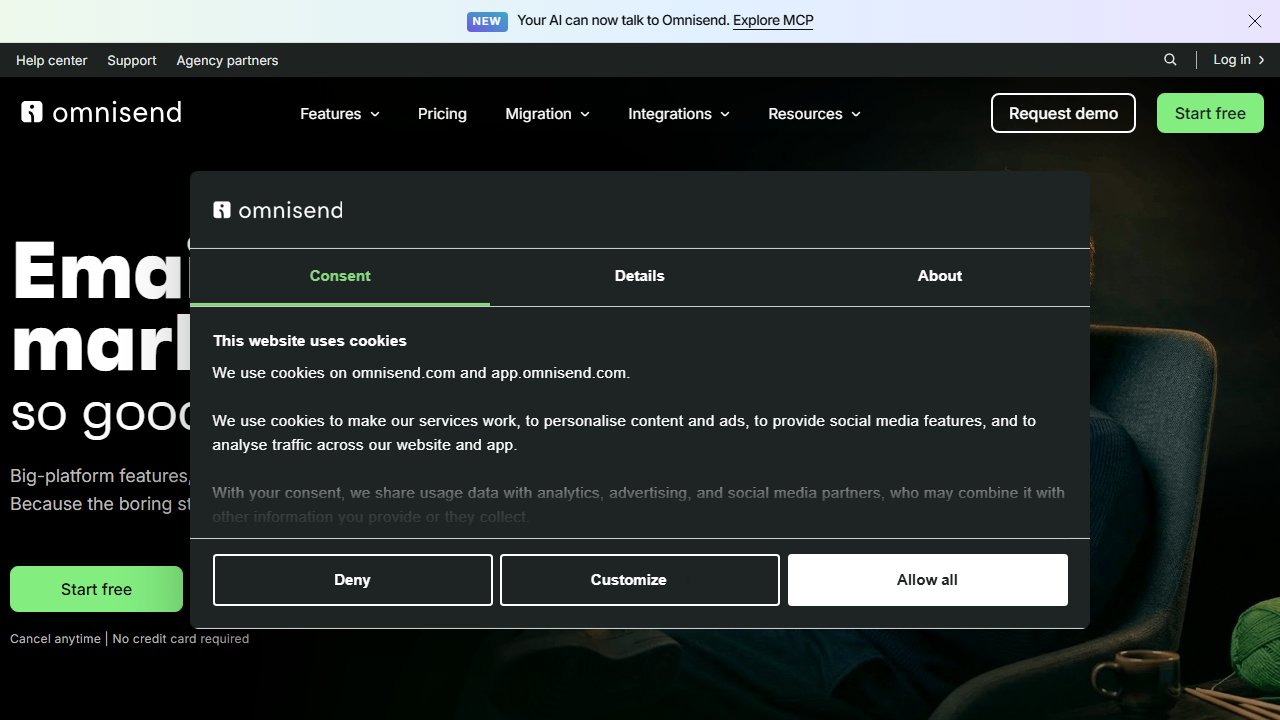
Omnisend is built for e-commerce stores, not bloggers. If you’re running a Shopify or WooCommerce store, it’s worth considering. If you’re a blogger or content creator, it’s not the right tool.
Free Plan
- Subscribers: 250
- Emails/month: 500
- Automation: Yes (including abandoned cart, welcome series)
- SMS: 60 credits/month
- Signup forms: Yes
- Segmentation: Basic
What I Like
The e-commerce automation is excellent — abandoned cart recovery, purchase follow-ups, browse abandonment. These work out-of-the-box and are genuinely the best in the category for online stores.
SMS integration on the free plan is rare. If you’re testing SMS alongside email, Omnisend gives you both.
What I Don’t Like
250 subscribers is the lowest free limit on this list. For a blogger or creator, this is essentially a trial, not a free plan.
The interface is optimized for product-centric emails, not content-based newsletters. If you’re a writer, the templates and workflow feel awkward.
Best For
Shopify or WooCommerce store owners who want cart recovery and transactional automation. Not for bloggers or content creators.
Quick Comparison
| Tool | Free Subscribers | Free Emails/Month | Automation on Free | Best For |
|---|---|---|---|---|
| MailerLite | 1,000 | 12,000 | Yes | Most beginners |
| Kit | 10,000 | Unlimited | Basic | Creators, fast growers |
| Brevo | Unlimited | 9,000 | Limited | High volume, transactional |
| Mailchimp | 500 | 1,000 | Basic only | Existing users, e-commerce |
| Omnisend | 250 | 500 | Yes (e-commerce) | Shopify/WooCommerce stores |
Our Pick
For most new bloggers and content creators: MailerLite. The free plan is the most complete — real automation, landing pages, forms, and a clean editing experience. It covers everything you need through your first 1,000 subscribers.
If you expect to grow fast or sell products early: Kit. The 10,000 free subscriber limit and native commerce integration are hard to beat. See our full MailerLite vs Kit/ConvertKit comparison once you outgrow the free tier.
If you have a large list to import or need transactional email: Brevo.
For the full content stack: pair your email tool with a design tool for email graphics and Grammarly to keep your copy clean before it goes out.
All pricing and free plan details current as of 2026. Email marketing platforms change their plans regularly — verify limits on each tool’s pricing page before signing up.